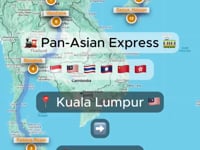
Day 2: Singapore 🇸🇬 → Kuala Lumpur 🇲🇾
☸️ It's hard not to compare the Indonesia-Malaysia-Singapore Growth Triangle (IMS-GT) with China's Greater Bay (GBA) Area—hubs connecting regional specialisations (finance, land, labour, tech). Both are regional integration stories, albeit on different scales.
They face rather different constraints. GBA integration is a top-down directive; regions generally lack political autonomy to push back. IMS-GT requires coordination between three countries.
A free market economist would favour integration. I'm undecided which model wins.
🇸🇬 Take Singapore: better integration lets it outsource land-intensive sectors while using migration policy to ensure it has the workers to grow sectors it has a comparative advantage. But it's still vulnerable to retail seepage—where residents cross the border for cheaper shopping—as happens in HK. Unlike the GBA, political autonomy gives sovereigns the ability to hit the brakes if integration doesn't suit them. Granted, one country's brake is another's missed opportunity—perhaps the GBA's lack of resistance helps it reach a higher aggregate regional growth potential.
Different approaches to integration— scale VS autonomy.
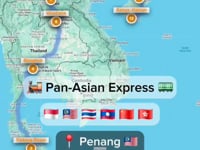
🚂 Next stop: Penang, Malaysia 🇲🇾