Day 5: Bangkok 🇹🇭 → Vientiane, Laos 🇱🇦
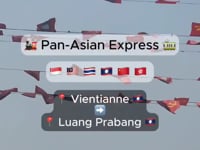
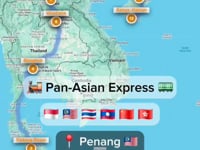
Bangkok's developed massively since I was last here, due to the traffic, scooters and monorail/metro are the way to get around. I took the night train from Bangkok to the Thai/Laos border. The "Pan Asian Express" is still rather theoretical, the Thai/Lao railways aren't connected, so the last mile was via informal tuk-tuks.
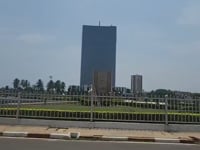
In Vientiane, the Lao kip—the local currency—is widely used for daily spending but for larger purchases US$ and Thai Baht dominate—e.g. car adverts are priced in US$.
The kip has fallen sharply over the past few yrs but—along with the rest of the macro situation (inflation, foreign reserves etc)—had stabilised over the past year (pre-energy price shock).
Laos produces & exports hydro-electricity but imports all its refined petroleum & gas. So far, the kip has weakened, inflation will likely rise while foreign reserves will be drained. I expect much of the past year's progress will be unwound—a real shame.
On the ground, petrol prices are driving already-high living costs higher. Some petrol stations are closed but those open don't have major queues.
On the bright side, higher for longer oil prices will increase demand for Laos hydro electricity exports. We at the EIU already saw this as a major growth driver, demand will further strengthen.
Adoption of Chinese EVs—visible in Vientiane where infrastructure is better—will partly boost domestic electricity demand. That said, private consumption is fairly weak and has been hammered by inflation and the Kip's depreciation over the past few years.
Music credits to Danielle "Denquar" Chupak—a talented 🇹🇭/🇬🇧 artist connecting the 2 cultures.
🚂 Next stop: Luang Prabang, Laos 🇱🇦